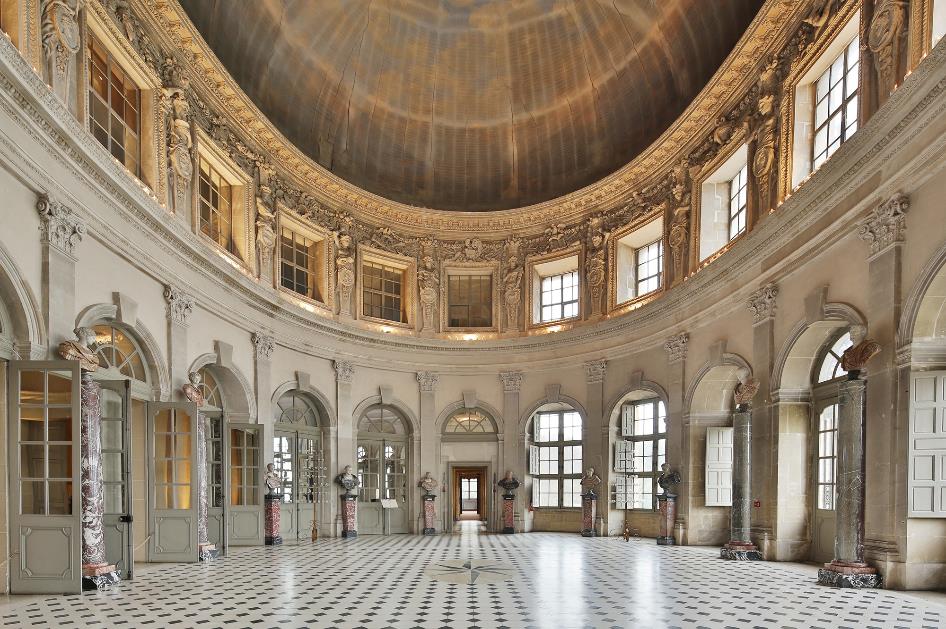
The Grand Salon
This oval-shaped room features a central cupola and serves as the architectural core of the château, reflecting the transition between interior spaces and the gardens.
View from the center to appreciate the symmetry of the cupola.

Vaux-le-Vicomte occupies a singular place in French architectural canon as the château that redefined royal aesthetics and triggered one of the most dramatic downfalls in 17th-century court politics. Built between 1658 and 1661, the estate became the template for every major palace that followed. Its fame rests on both artistic achievement and the scandal that ended its creator's career.
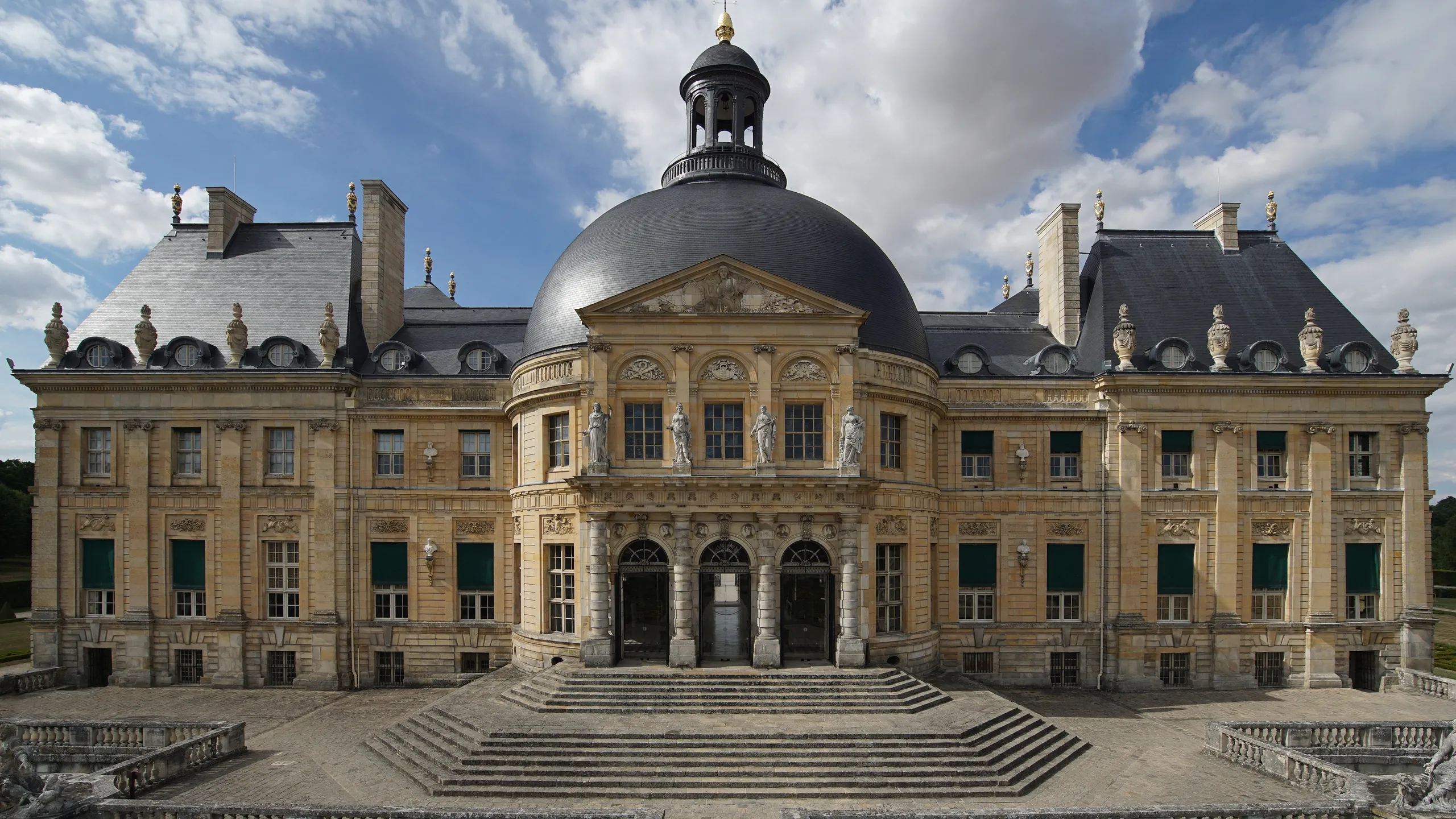
Quick answer
Le Château de Vaux-le-Vicomte is famous because it was the first major collaboration between architect Louis Le Vau, painter Charles Le Brun, and landscape designer André Le Nôtre—the creative trio who would later design Versailles. Finance minister Nicolas Fouquet commissioned the estate to showcase his wealth and taste, but the château's splendor so enraged Louis XIV at its 1661 inauguration that Fouquet was arrested three weeks later, accused of embezzlement, and imprisoned for life. The king seized the design team and many of the château's furnishings to build his own palace.
Nicolas Fouquet's estate represented the apex of mid-17th-century French artistry, achieved through a level of coordination unprecedented in domestic architecture. Le Vau designed a compact central block with projecting pavilions that balanced grandeur with intimacy. Le Brun orchestrated interior decoration across sixteen state rooms, from the gilt ceiling of the Grand Salon to the trompe-l'oeil frescoes in the Chambre des Muses. Le Nôtre engineered the gardens as a single perspectival composition, using hydraulic systems to animate fountains across three cascading terraces. The estate's notoriety stems from the fête of August 17, 1661, when Fouquet hosted six thousand guests including the king. The evening featured a Molière premiere, a twenty-four-course banquet served on gold plate, and fireworks choreographed to music by Lully. Louis XIV, who had inherited a medieval Louvre and lived in cramped quarters at Fontainebleau, interpreted the display as a direct challenge to royal preeminence. Jean-Baptiste Colbert, Fouquet's rival, had already been compiling evidence of financial irregularities; the fête provided the political pretext for arrest. Why is le château de vaux-le-vicomte famous beyond the scandal itself lies in its architectural DNA—every element codified principles that became standard at Versailles and across European court architecture for the next century. The enfilade layout of interconnected salons, the integration of garden axis with building symmetry, and the unified decorative program linking ceiling paintings to wall tapestries all originated here. Le Nôtre's use of forced perspective, where paths narrow and water features shrink with distance to exaggerate depth, transformed landscape design. The château remained in the Fouquet family until 1705, then passed through several owners before industrialist Alfred Sommier purchased the ruined estate in 1875 and began a forty-year restoration. His descendants still maintain the property, which opens to visitors year-round. The Saturday evening candlelight tours, when two thousand candles illuminate the gardens as they did in 1661, remain the most direct way to understand the visual impact that unsettled a king.
“The estate's 1661 inauguration fête so outshone royal ceremonies that Louis XIV had its creator arrested three weeks later.”
Nicolas Fouquet, Louis XIV's superintendent of finances, commissioned Vaux-le-Vicomte in 1656 as a declaration of taste and power. He assembled three talents who would define French baroque: architect Louis Le Vau, painter Charles Le Brun, and landscape designer André Le Nôtre. Le Vau's château introduced the innovation of a central oval salon projecting into both garden and entrance court, breaking the fortress tradition of enclosed blocks. Le Brun orchestrated interiors of unprecedented unity, directing sculptors, gilders, and painters toward a single decorative vision. Le Nôtre engineered the gardens as a theatrical composition, using optical perspective to make the distant Hercules fountain appear closer than its actual kilometer from the house. On 17 August 1661, Fouquet hosted a fête for six thousand guests. The program included a Molière premiere, a firework display reflected in the canal, and table service on gold plate. Louis XIV attended and observed a subject commanding resources that rivaled the crown. Within three weeks, the king ordered Fouquet's arrest. Jean-Baptiste Colbert, Fouquet's rival, had compiled evidence of embezzlement. Fouquet spent his remaining nineteen years in the fortress of Pignerol, forbidden visitors and correspondence. Louis confiscated the château's contents, imprisoned the architects briefly, and redirected the entire creative team to build Versailles. The 1661 fête demonstrated why Le Château de Vaux-le-Vicomte is famous: it provoked the most consequential act of royal jealousy in French architectural history. The Fouquet family regained the estate in 1673, but financial decline led to its sale in 1705. Industrial magnate Alfred Sommier purchased the abandoned property in 1875 and funded a thirty-year restoration. Visitors today walk through Le Brun's Salon des Muses with its original ceiling allegories intact, descend Le Vau's double horseshoe stair, and follow the central axis Le Nôtre calculated to frame the horizon. The candlelit Saturday evenings in summer recreate the lighting technology Fouquet's guests experienced, two thousand candles illuminating the façade and parterres as they did in 1661.
Nicolas Fouquet commissions Le Vau, Le Brun, and Le Nôtre to design Vaux-le-Vicomte as a unified ensemble of architecture, decoration, and landscape.
Fouquet hosts a fête for six thousand guests on 17 August; Louis XIV attends and orders Fouquet's arrest three weeks later for embezzlement and perceived insolence.
The Fouquet family regains possession of the château after Louis XIV's initial confiscation, though the estate remains depleted of its original furnishings.
Financial pressures force the Fouquet heirs to sell Vaux-le-Vicomte, beginning a period of neglect that lasts over a century.
Industrialist Alfred Sommier purchases the abandoned property and initiates a comprehensive restoration that continues for three decades.
The Sommier descendants open Vaux-le-Vicomte to the public, introducing candlelit evening visits that replicate the 1661 fête's lighting.
The architecture of Vaux-le-Vicomte established the definitive model for the classical French palace. Its layout integrates precise symmetry, opulent decorative arts, and expansive landscape design that influenced European royal residences for centuries.
This oval-shaped room features a central cupola and serves as the architectural core of the château, reflecting the transition between interior spaces and the gardens.
View from the center to appreciate the symmetry of the cupola.
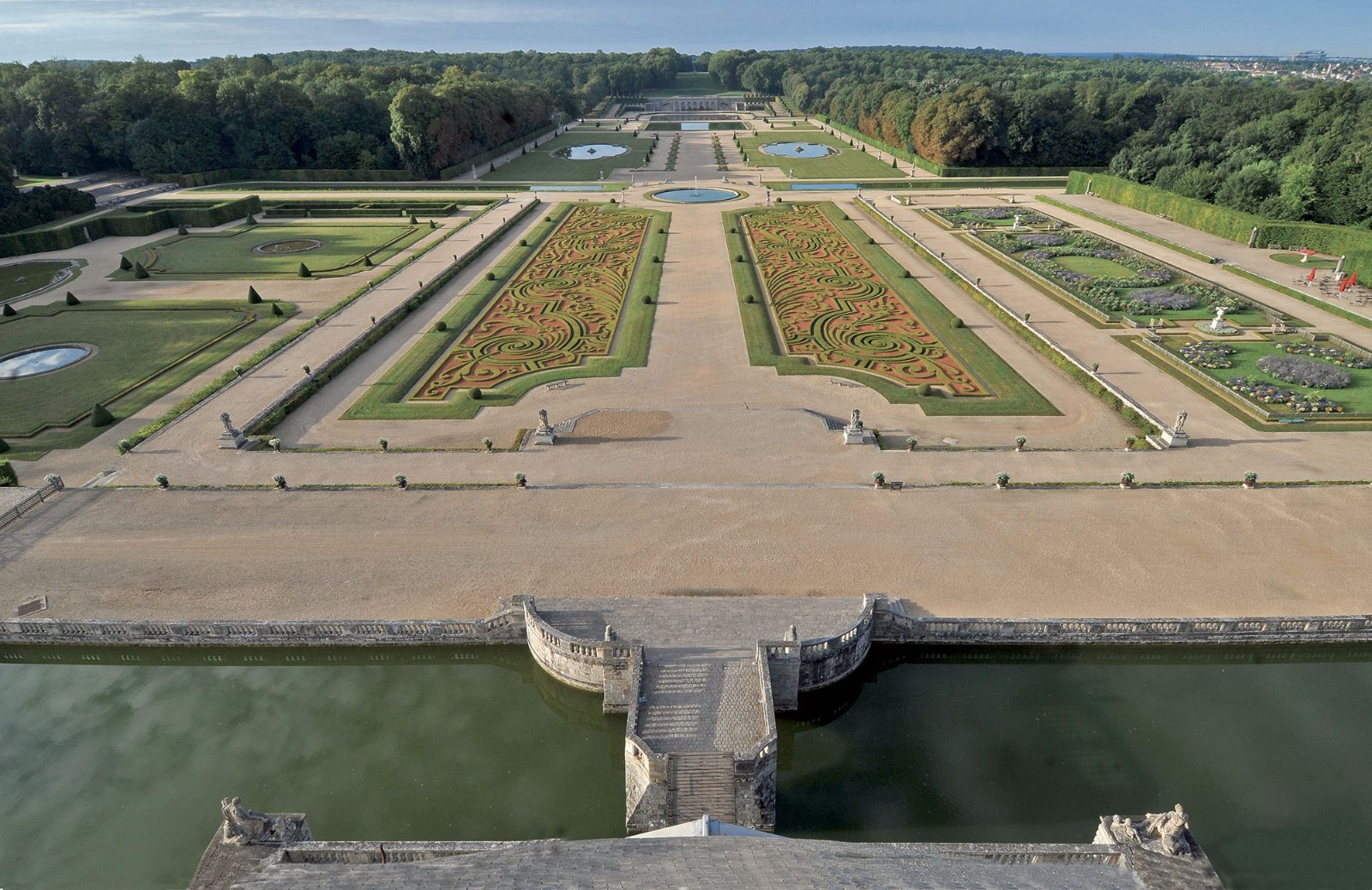
Designed by André Le Nôtre, these gardens introduced the jardin à la française style, emphasizing perspective, water features, and geometrical precision.
Walk the main axis to see the deliberate landscape perspective.
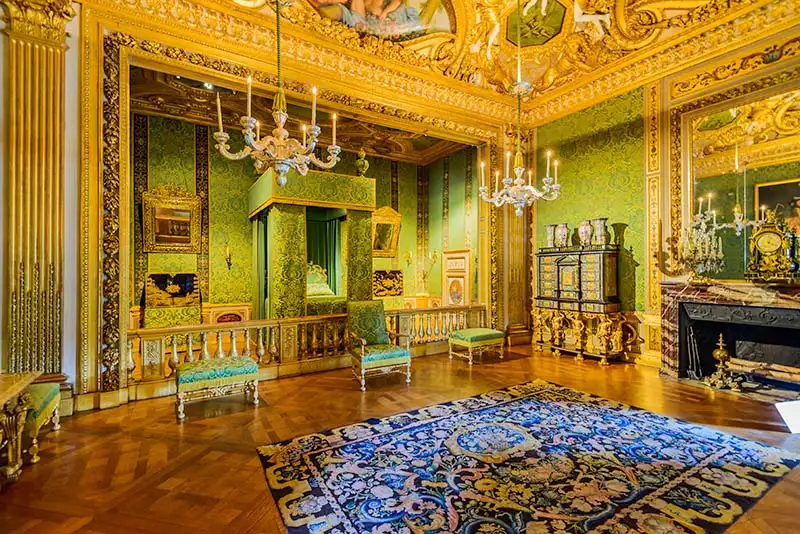
Designed for Louis XIV, this room showcases the influence of Charles Le Brun in its elaborate ceiling paintings and rich textile integration.
Look closely at the gilded moldings and painted ceiling details.
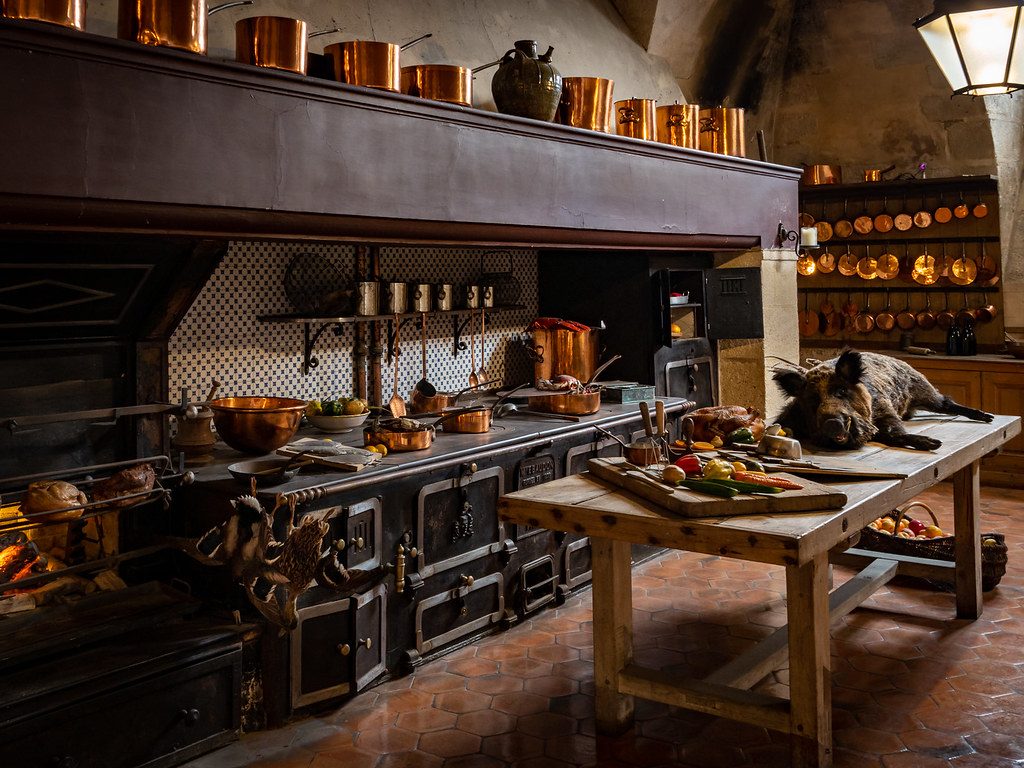
Located in the basement, these vast service areas provide a stark contrast to the upper floor opulence and reveal the daily logistics of a 17th-century estate.
Visit early to avoid crowds in these narrow service corridors.
The Château de Fontainebleau operates throughout the week, though it remains closed on Tuesdays. Visitors are encouraged to plan their arrival between 09:30 and 16:00 to avoid peak afternoon crowds.
Everything you need to know about why is le château de vaux-le-vicomte famous
The estate is renowned for being the prototype of the French formal garden style, created by André Le Nôtre. It serves as the primary inspiration for the design and construction of the Palace of Versailles. While visitors often ask why is le château de vaux-le-vicomte famous, its reputation rests on this immense influence on European landscape design and Baroque architecture.
Vaux-le-Vicomte represents the private ambition of Nicolas Fouquet, whereas Château de Fontainebleau served as a primary residence for French monarchs for eight centuries. Exploring why is le château de vaux-le-vicomte famous helps contrast the intimate scale of a noble estate with the vast, sprawling royal residence of Fontainebleau. Both sites offer distinct insights into the evolution of French artistic patronage.
The gardens are celebrated for their sophisticated use of optical illusions and controlled perspectives across the landscape. This site remains a masterclass in Baroque landscaping, which explains why is le château de vaux-le-vicomte famous among horticultural historians today. These grounds perfectly demonstrate the integration of water features and sculpted shrubbery to guide the viewer’s eye.
The best arrival window is between 09:30 and 16:00 to avoid peak crowds. Visiting during this time ensures you have enough opportunity to fully experience the two-hour tour. It is advisable to plan your trip around these hours to maximize your exploration of the Grands Appartements.
Attempting to see both estates in a single day is ambitious due to their size and the travel required between locations. A dedicated visit to each allows for a more relaxed pace and a deeper appreciation of their individual historical narratives. We recommend checking specific operating schedules to ensure a successful itinerary for both landmarks.
The collaboration between architect Louis Le Vau, painter Charles Le Brun, and gardener André Le Nôtre redefined the standards of classical French artistry. Their work here set a new benchmark for luxury that defined an era of aristocratic building. This synergy of talent is a primary reason visitors seek to understand the site's lasting prominence.
The estate’s opulent inaugural fete triggered the jealousy of the Sun King, leading to the imprisonment of the owner, Nicolas Fouquet. This dramatic fall from grace provides a compelling narrative that keeps the estate firmly in the cultural consciousness. It serves as a stark reminder of the risks associated with outshining a monarch during the 17th century.